

Experiments in Estrangement
The first time silence felt like an opening, not a loss.

My first semester at LSU, I move into a dorm room on the fourteenth floor of Kirby Smith Hall.
The walls are painted green. Cinderblock. Two twin beds pressed against opposite walls. One window. A shared bathroom through a side door. The room is small and plain, and I like it immediately.
I set my things down. I make the bed. I hang nothing on the walls.
From the window, I can see the football stadium sitting dark and massive in the distance. The campus spreads out below me, unfamiliar and indifferent. I don’t know a single person in Baton Rouge.
Registration is complete. The hallway outside my door is already quieting down.
I close the door.
My mother buys me a small black-and-white television before I leave. Ninety-nine dollars at Kmart. She carries it to the car herself.
I set it on the desk in the corner.
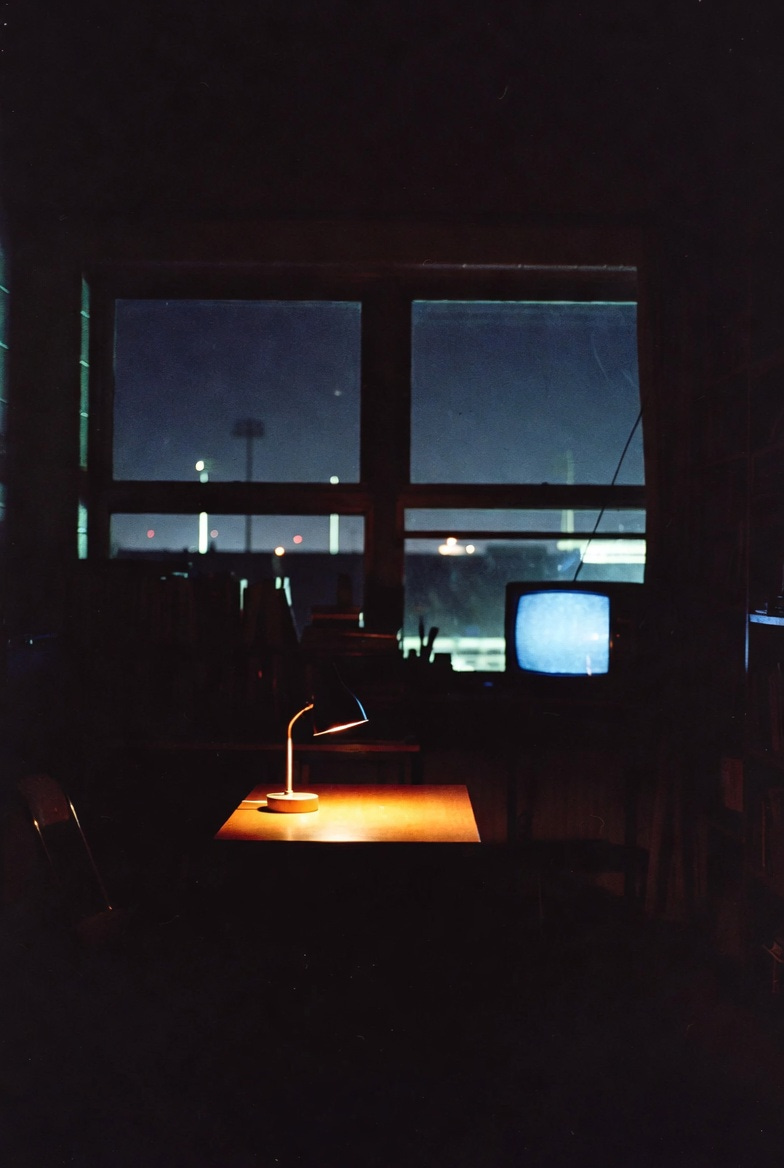
On the same desk, I plug in a small lamp. When I turn it on, it throws a low amber circle across the desktop. I switch off the overhead light. The room goes dim. The television flickers in the corner. The lamp holds its small pool of warmth.
This is the way I like it.
Somewhere past nine o’clock, the hallway goes completely silent.
No one knocks. No one calls my name. No one in the world knows exactly what I am doing at this moment.
I am alone here.
I sit with that sentence for a moment. I expect it to feel like a warning. It doesn’t.
The silence doesn’t press against me. It opens. The room, cinderblock and lit by a single lamp, begins to feel spacious in a way I don’t have words for yet.
No one is defining me tonight. No one is interrupting. No one needs me to be anything in particular.
I sit in the dim light and feel something I will spend years trying to name. It is not loneliness. It is closer to introduction.
The television flickers. The lamp holds.
Outside the window, the stadium is dark.
I would only later learn what kind of room this was.